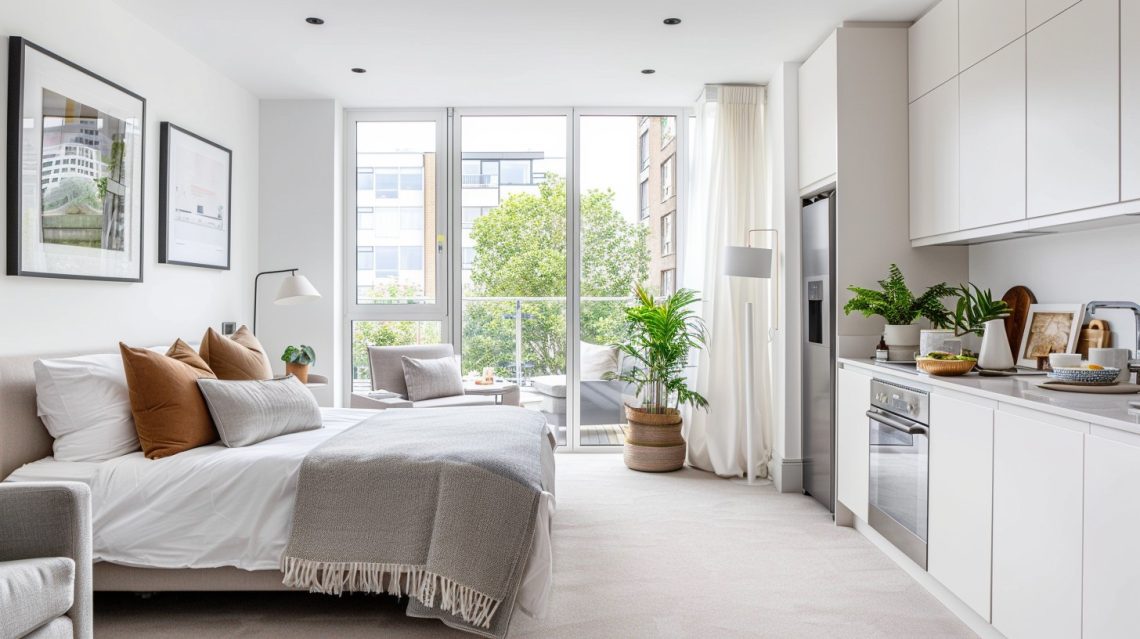
Ask most people whether carpet cleaning is a priority in a studio flat and they will hesitate. It is, after all, just one room – how much difference can it make? The answer is: more than in almost any other property type. In a studio, the carpet is not a supporting element of the interior; it is the interior. Every activity – sleeping, eating, working, entertaining – takes place on the same stretch of floor. That concentration of daily life means the carpet accumulates wear, soiling, and invisible contaminants at a rate that would be spread across five or six rooms in a larger home. The result is a single clean delivering a transformation that is total and immediate, covering the entire living environment in one visit. That is a rare return on investment in home maintenance.
The Studio Flat Carpet Problem – Why Small Spaces Get Dirty Fast
Understanding why studio carpets deteriorate quickly is the first step to addressing the problem properly.
One Room, Every Activity
In a traditional flat or house, foot traffic is naturally distributed. The bedroom carpet takes light, barefoot use. The hallway takes the brunt of outdoor footwear. The living room sees moderate daily activity. In a studio, all of that funnels into one continuous surface. The path from the bed to the kitchen area, and from the door to the desk, becomes a heavily worn lane within months. Carpet fibres along these routes suffer repeated compression without recovery time, and the soiling carried in on shoes – grit, moisture, road dust – grinds into the pile rather than sitting on top of it. This mechanical abrasion is cumulative and, left untreated, permanently weakens the fibre structure. What reads as a “dirty carpet” is often a carpet that has been ground down to a point where the damage is partly structural, not just superficial.
The Hidden Hygiene Factor
The hygiene implications of a studio carpet are frequently overlooked. Because cooking, sleeping, and general living all happen within the same airspace, airborne particles – cooking vapours, skin cells, dust, pet dander – have nowhere to go except into the carpet. Studios in London’s older converted buildings tend to have limited ventilation, which compounds the problem. Moisture from cooking or drying laundry settles into the pile, creating conditions in which dust mites thrive. Allergen levels in poorly maintained studio carpets can be notably higher than in the same square footage of a larger property, precisely because there is no dispersal across separate rooms. For residents with asthma, eczema, or respiratory sensitivities, this is not a cosmetic issue – it is a health one.
The Visual Impact – Why a Clean Carpet Transforms a Studio Completely
Beyond hygiene, the visible difference a professional clean makes in a studio flat is disproportionate to the space involved.
The Floor Is Your Biggest Surface
In any room, the floor is typically the largest single surface – but in a studio, it is the dominant visual element by a considerable margin. There are no adjacent rooms to draw the eye, no change of flooring at a doorway to break the composition. The carpet sets the tone for everything above it. A clean, evenly coloured carpet with good pile depth makes a studio feel cohesive, well-kept, and – crucially – larger. A grey, flattened, stained carpet does the opposite: it anchors every piece of furniture to a backdrop that undermines the whole interior, regardless of how well chosen the furnishings are. For landlords and letting agents preparing a studio for viewings, this is a practical consideration. The carpet is the first and most persistent impression a prospective tenant forms of the property.
Colour, Tone, and Natural Light
There is a lesser-known consequence of heavily soiled carpet that is particularly relevant in London’s housing stock: light absorption. A clean carpet with healthy pile reflects ambient light and contributes to the brightness of a room. A soiled carpet absorbs it. In the compact, often north-facing studio conversions that make up a significant proportion of London’s rental market, every bit of reflected light matters. Professional hot water extraction does not just remove surface dirt – it restores pile depth, allowing fibres to stand upright again and interact with light as they were designed to. The result is a room that feels measurably brighter without any change to the lighting or décor.
Professional Cleaning vs. DIY in a Studio Flat
The hire-machine route has a particular set of drawbacks in a studio setting that are worth addressing honestly.
The Over-Wetting Risk
Consumer carpet cleaning machines available from supermarkets and hardware shops inject significantly more water into carpet fibres than professional equipment does, and extract it far less efficiently. In a house, this is an inconvenience – windows can be opened, rooms can be cordoned off, and the carpet can air dry over 24 to 48 hours. In a studio, the resident has no alternative living space to retreat to, and the confined airspace means drying times stretch further. Prolonged moisture trapped in carpet backing and underlay creates conditions for mould, mildew, and damp odours – outcomes that are considerably worse than the original soiling. Professional equipment, particularly truck-mounted hot water extraction systems, removes the majority of moisture during the cleaning process itself, typically reducing drying time to two to four hours.
Furniture and Space Management
A studio presents a logistical challenge that DIY cleaning rarely accounts for: there is nowhere for the furniture to go. A bed, sofa, desk, and wardrobe in a 30-square-metre space leave very little clearance for manoeuvring a hire machine, and most residents end up cleaning around items rather than beneath them – leaving the most heavily soiled areas directly under furniture untouched. A professional technician works with a system for moving, protecting, and replacing items efficiently within a confined space, using furniture tabs and corner protectors as standard. The difference in coverage between a professional clean and a DIY attempt in a studio is often the difference between a partial result and a complete one.
What a Professional Studio Carpet Clean Involves
Knowing what to expect from a professional visit removes uncertainty and helps residents and landlords prepare appropriately.
Assessment and Fibre Identification
A professional technician will begin by assessing the carpet type before selecting any chemistry or method. This step matters more than it might appear. Many modern London studio builds use budget loop-pile or blended synthetic carpets that respond well to hot water extraction but can be damaged by alkaline pre-treatments designed for heavier soiling. Period conversions and higher-specification new builds, on the other hand, may feature wool or wool-blend carpets that require lower-temperature cleaning and gentler, pH-neutral solutions. Getting this wrong does not just affect cleaning performance – it can cause irreversible shrinkage, colour bleed, or pile distortion.
The Cleaning Process Step by Step
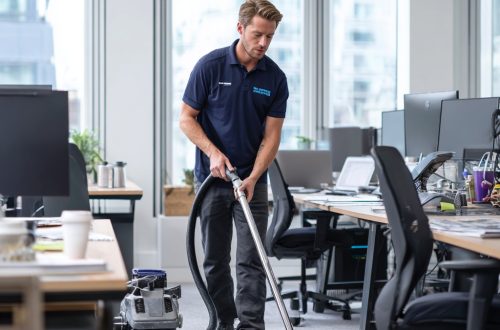
Once the assessment is complete, the process follows a clear sequence. The carpet is dry-vacuumed thoroughly first – a step that removes the loose particulate matter that, if left in place, would turn to mud during wet cleaning. High-traffic lanes and visible staining are then pre-treated with appropriate spotting agents and allowed to dwell. Hot water extraction follows: heated water is injected under pressure into the pile and immediately extracted along with dissolved soiling. The carpet is then groomed to realign the pile direction, and – where needed – a dry-air finishing step accelerates drying. For a typical studio flat, the full process takes between 60 and 90 minutes. Residents can expect to walk on the carpet lightly within a few hours and to use the space fully by the end of the day.
Keeping It Clean – Maintenance Between Professional Visits
A professional clean is most effective when it is supported by straightforward daily habits.
High-Traffic Lane Management
The most practical protective measure in a studio is a washable runner or mat placed along the primary routes – typically from the entrance to the main living area, and from the bed to the bathroom or kitchen zone. These intercept the majority of tracked-in grit and moisture before it reaches the carpet proper. Rotating their position periodically prevents localised wear underneath them. When vacuuming, slow, overlapping passes in both directions are considerably more effective than quick single passes, particularly for loop-pile carpets where debris settles between the loops rather than sitting on top.
How Often Should a Studio Carpet Be Professionally Cleaned?
For owner-occupiers, a professional clean every 6 to 12 months is a reasonable baseline, adjusted upward for pet owners, allergy sufferers, or anyone who works from home full time – all circumstances that increase both soiling rate and the health relevance of a clean pile. For landlords, a professional clean at every change of tenancy is not just good practice but a sound financial decision: it documents the carpet’s condition, protects against deposit disputes, and ensures each new occupant begins their tenancy in a hygienic, well-presented space. London’s urban environment is also worth factoring in. Pollution particulates, the fine black dust associated with the Underground network, and the city’s relatively high humidity all mean that carpets in London properties soil faster and hold more embedded debris than their equivalents in less densely urban settings.
A Note for London Landlords and Letting Agents
For landlords managing studio flats across Greater London, professional carpet cleaning occupies a uniquely efficient position in the pre-tenancy checklist. Unlike a larger flat where cleaning costs are distributed across a hallway, bedroom, and reception room, a studio concentrates the entire rentable floor area into a single carpet. One professional visit addresses the whole property’s flooring in one appointment – typically under two hours – at a cost that is straightforward to document. That documentation is valuable. In the event of a tenancy deposit dispute, a dated professional cleaning receipt provides clear evidence of condition at the start of the tenancy, which carries weight in deposit scheme adjudications. A studio that presents with a fresh, clean carpet also lets faster and at stronger rents – a reality that experienced letting agents across London know well.
The Smallest Floor Plan, The Biggest Difference
The studio flat asks its carpet to do something no other residential format does: absorb the full weight of everyday life without respite or distribution. That makes the carpet uniquely vulnerable, and a professional clean uniquely impactful. There is no other single maintenance task in a studio flat that touches the entire living environment, addresses both hygiene and aesthetics simultaneously, and delivers a visible result that lasts. Whether the goal is a healthier space to live in, a stronger presentation for letting, or simply the satisfaction of a thoroughly refreshed home, professional carpet cleaning in a studio flat justifies itself completely – on the smallest possible floor plan, it makes the biggest possible difference.